

How does a water ionizer machine work with different water pressures?
Nov 14, 2025
Leave a message
As a supplier of water ionizer machines, I've witnessed firsthand the growing interest in these devices and the questions that often arise, particularly regarding how they function under different water pressures. In this blog, I'll delve into the science behind water ionizer machines and explain how water pressure affects their operation.
Understanding Water Ionizer Machines
Before we discuss the impact of water pressure, let's briefly understand what a water ionizer machine does. A water ionizer is a device that uses electrolysis to separate water into alkaline and acidic components. The process involves passing an electric current through water that has been treated with a small amount of salt to increase its conductivity. As the current flows, positively charged ions (cations) are attracted to the negative electrode (cathode), while negatively charged ions (anions) are attracted to the positive electrode (anode). This separation results in the production of alkaline water at the cathode and acidic water at the anode.
Alkaline water is believed to have several health benefits, including improved hydration, better digestion, and antioxidant properties. Acidic water, on the other hand, can be used for various purposes such as cleaning and disinfection.
The Role of Water Pressure
Water pressure plays a crucial role in the operation of a water ionizer machine. It affects the flow rate of water through the device, which in turn influences the efficiency of the electrolysis process. Here's how:
Flow Rate
Water pressure determines the speed at which water flows through the ionizer. If the water pressure is too low, the flow rate will be slow, and the water may not spend enough time in the electrolysis chamber to undergo a complete separation. This can result in water that is not sufficiently ionized, with a lower pH and ORP (oxidation-reduction potential) than desired.
Conversely, if the water pressure is too high, the flow rate may be too fast, and the water may pass through the electrolysis chamber before the electrolysis process is complete. This can also lead to poorly ionized water.
Electrolysis Efficiency
The efficiency of the electrolysis process depends on the contact time between the water and the electrodes. A slower flow rate allows for more contact time, which means more ions can be separated and the water can be more effectively ionized. However, if the flow rate is too slow, it can also lead to a buildup of scale and mineral deposits on the electrodes, which can reduce their efficiency over time.

Safety
Water pressure also affects the safety of the ionizer machine. High water pressure can put stress on the internal components of the device, leading to leaks or other malfunctions. It's important to ensure that the ionizer is designed to handle the water pressure in your area and that it is installed correctly to prevent any safety issues.
Optimal Water Pressure for Water Ionizer Machines
Most water ionizer machines are designed to operate within a specific range of water pressures. Typically, the optimal water pressure for a water ionizer is between 20 and 80 psi (pounds per square inch). This range allows for a sufficient flow rate to ensure efficient electrolysis without putting too much stress on the device.
If your water pressure is outside of this range, you may need to take some steps to adjust it. For example, if your water pressure is too low, you can install a booster pump to increase the pressure. If your water pressure is too high, you can install a pressure regulator to reduce it.
Testing and Adjusting Water Pressure
Before installing a water ionizer machine, it's important to test your water pressure to ensure that it is within the optimal range. You can do this using a water pressure gauge, which can be purchased at most hardware stores. Simply attach the gauge to an outdoor faucet and turn on the water to get a reading.
If your water pressure is too low or too high, you may need to make some adjustments. Here are some tips:
Low Water Pressure
- Check for leaks: A leak in your plumbing system can cause a drop in water pressure. Check all of your pipes, faucets, and toilets for leaks and repair them as needed.
- Clean your pipes: Over time, mineral deposits can build up in your pipes, reducing the flow of water. You can use a pipe cleaner or a descaling solution to clean your pipes and improve water pressure.
- Install a booster pump: If your water pressure is consistently low, you may need to install a booster pump to increase the pressure. A booster pump can be installed near your water meter or at the point where the water enters your home.
High Water Pressure
- Install a pressure regulator: A pressure regulator is a device that reduces the water pressure to a safe and optimal level. It can be installed near your water meter or at the point where the water enters your home.
- Check your water heater: A faulty water heater can cause high water pressure. Check your water heater's pressure relief valve to ensure that it is working properly.
- Adjust your faucets and showerheads: Some faucets and showerheads have adjustable flow restrictors that can be used to reduce the water pressure. You can adjust these restrictors to reduce the flow of water and lower the pressure.
Our Water Ionizer Machines
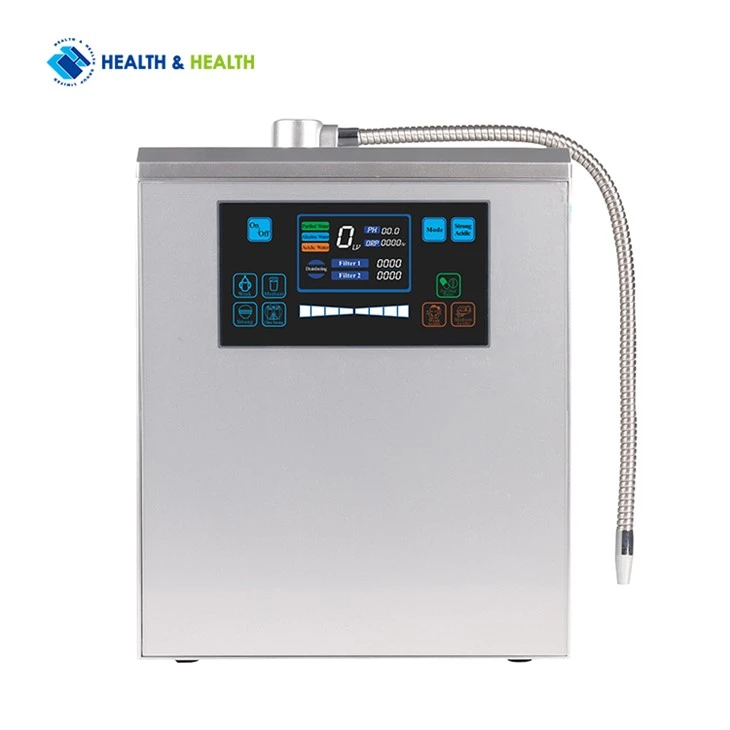
At our company, we offer a range of high-quality water ionizer machines that are designed to operate efficiently under different water pressures. Our Alkaline Water Machine BW-6000 is a top-of-the-line model that features advanced electrolysis technology and a durable design. It is suitable for both residential and commercial use and can handle water pressures between 20 and 80 psi.
We also offer a countertop water ionizer machine that is perfect for small spaces and households. This compact and easy-to-use device is designed to provide you with fresh, alkaline water at the touch of a button. It also has a built-in water filter that removes impurities and contaminants from the water, ensuring that you get the purest and healthiest water possible.
Conclusion
Water pressure is an important factor to consider when using a water ionizer machine. It affects the flow rate, electrolysis efficiency, and safety of the device. By understanding how water pressure works and taking steps to ensure that it is within the optimal range, you can ensure that your water ionizer machine operates efficiently and provides you with high-quality, ionized water.
If you have any questions about our water ionizer machines or need help adjusting your water pressure, please don't hesitate to contact us. We're here to help you make the most of your water ionizer and enjoy the many benefits of alkaline water.
References
- "The Science of Water Ionization." Water Ionizer Guide.
- "How to Test and Adjust Water Pressure." Home Depot.
- "Water Ionizer Machines: How They Work and Their Benefits." Healthline.